Editorial guide
Dry-aged beef: how dry ageing works
Dry-aged is one of the most widely used terms in premium beef. This guide explains the process, its controls and its costs; time ranges are covered in the dedicated guide to beef ageing times.
What happens in a dry-ageing room
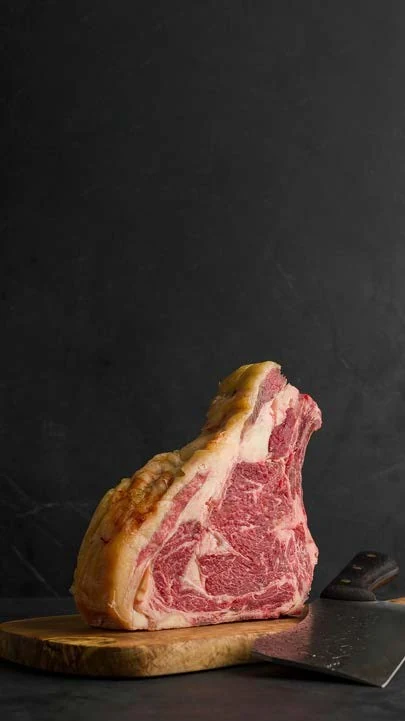
The cut is kept without packaging in a room with controlled temperature, humidity, hygiene and airflow. Gradual moisture loss concentrates the product, while natural enzymes help change its texture.
The outer surface dries and forms a protective crust that is trimmed away before portions are prepared. The result depends on the original cut and professional control, not on an isolated label.
Dry-aged vs wet-aged
Neither method guarantees a better cut on its own: butchery, fat, storage and execution remain decisive.
| Criterion | Dry-aged beef | Wet-aged beef |
|---|---|---|
| Environment | Cut exposed in a controlled ageing room. | Cut protected inside vacuum packaging. |
| Yield loss | Greater because of dehydration and external trimming. | Lower, with a more stable yield. |
| Profile | Greater concentration and potentially intense aromas. | A more protected ageing process and a generally gentler profile. |
Outer crust, yield loss and professional control
Drying reduces weight, while trimming removes the surface that is not intended for consumption. This yield loss, together with ageing-room time and space, energy and initial selection, helps explain the final price.
For a comparison of durations that does not turn them into an automatic quality scale, see the dedicated guide to ageing times.