
Editorial guide
Beef ageing times: 7, 21, 30, 45 and 120 days
The number of days is useful for orientation, but is not an absolute quality scale. This page explains how to interpret common time ranges.
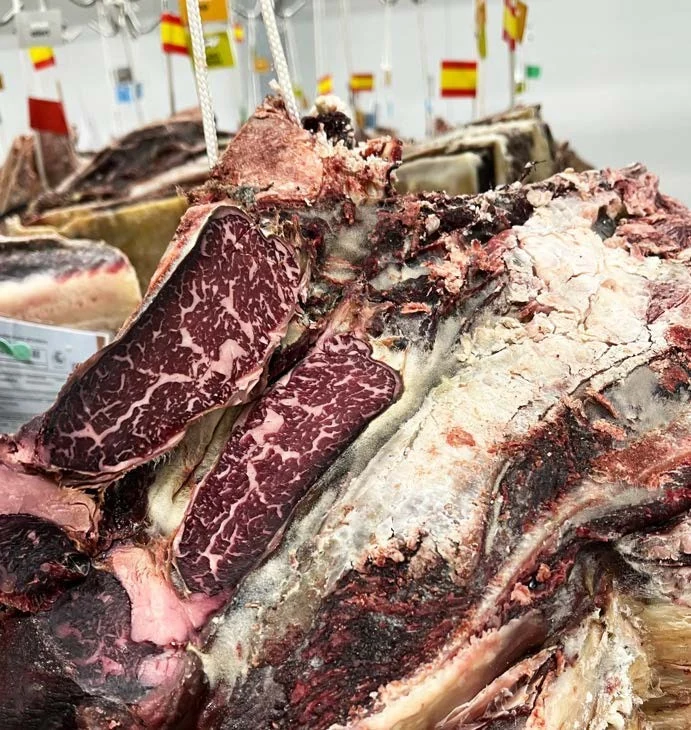
An indicative ageing timeline
The number of days is a visual reference, not a guarantee of quality. The result depends on the cut, fat, ageing room, hygiene, airflow and professional judgement.
- 7 days
The change begins
The beef starts to develop, but flavour and texture still show little culinary transformation.
- 21 days
Moisture loss
The cut begins to concentrate and unprotected areas dry noticeably.
- 30 days
Commercial profile
More flavour, improved texture and notes that may suggest nuts, butter or gentle curing begin to emerge.
- 45 days
Greater intensity
Fat becomes more prominent and the aromatic profile grows more pronounced.
- 120 days
Extreme ageing
It is not better for everyone: the result is more intense and particular, with far greater yield loss.
Editorial guidance
Ageing times and commercial names provide orientation, but final quality depends on the cut, process, fat, storage and cooking.