
Editorial guide
Glossary of premium beef, ageing and beef cuts
A straightforward glossary of common terms to read before exploring guides, comparing cuts or buying online.
Essential terms
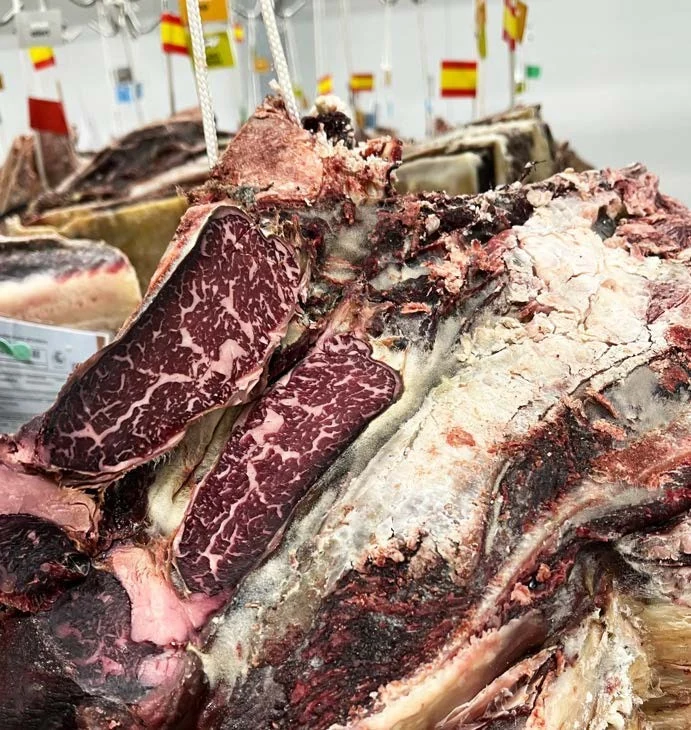
- Dry-aged beef
- Beef aged without packaging in a controlled room, with moisture loss and aromatic development.
- Wet-aged beef
- Beef aged in vacuum packaging, providing a more protected and consistent process.
- Marbling
- Fat distributed within the muscle. It influences juiciness, texture and flavour.
- Yield loss
- Weight lost through dehydration and trimming during ageing.
- Cold chain
- Maintaining an appropriate temperature from the supplier until the product is received.
- Picanha
- The rump-cap cut, popular for grilling because of its external fat cap.
- Skirt steak
- A thin, flavourful cut from the flank and plate area, often cooked quickly on the grill.
- Intramuscular fat
- Visible seams of fat within the beef. They can help indicate likely juiciness and flavour, but do not replace information about the cut, storage or cooking.
- External fat
- The layer that protects certain cuts and may contribute flavour during cooking. It is distinct from marbling within the muscle.
- Traceability
- Information linking a product to its origin, batch, operator and commercial journey.
- Vacuum packaging
- A system that removes much of the air from the pack. The seal must remain intact, and the stated dates and storage instructions must always be followed.
- Bone-in rib steak
- A thick, bone-in loin cut commonly intended for sharing and for a cooking method suited to its thickness.
- Entrecôte
- A boneless loin cut. It is generally manageable on a griddle or grill and easy to portion.
- Ribeye
- An international name associated with the eye of the rib section. Trimming and format may vary by country and supplier.
- Tomahawk steak
- A thick bone-in rib steak with a long section of rib bone left attached. Its presentation is distinctive, but buyers should consider the actual thickness of the beef rather than the bone alone.
- Fillet
- A very tender, generally lean internal cut with a more delicate flavour than other loin cuts.
- Resting
- A brief pause after cooking and before slicing. It helps serve the cut with less immediate loss of juices.
- Slice against the grain
- Cutting perpendicular to the visible muscle fibres to make the beef easier to bite.
- Searing
- Browning the surface with heat. It adds colour and aromas, but does not make the cut watertight or guarantee the internal doneness.