
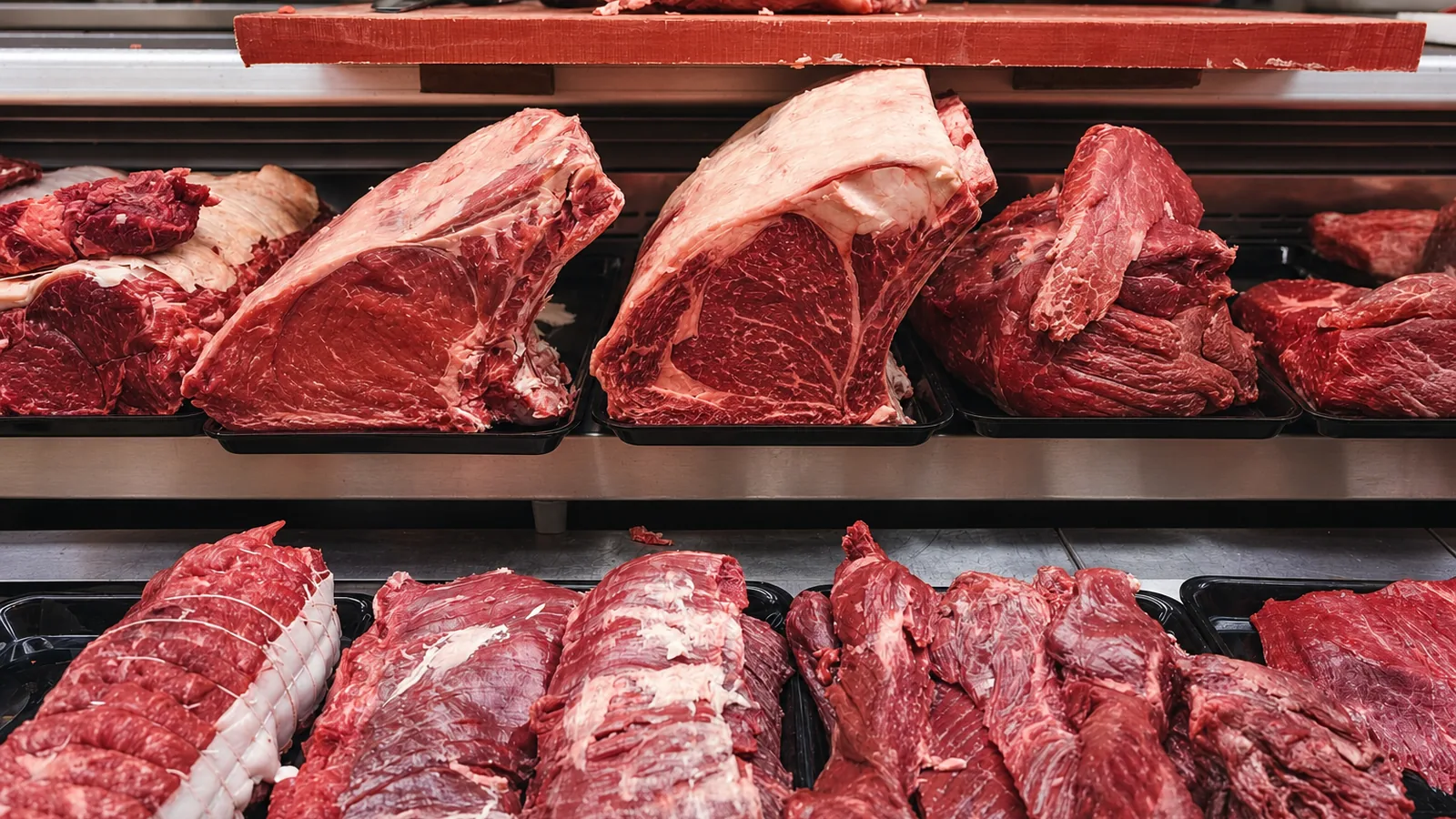
You arrive at a Spanish butcher's with a family recipe in mind. You are looking for muchacho redondo, punta trasera, bife angosto, bola de pierna or arrachera. The labels at the counter, however, use different names: redondo, tapilla, lomo bajo, babilla or entraña.
The cut you remember has not disappeared. The language of butchery has changed.
The problem is that cut names do not work like ordinary translations. Two countries may use different words for a very similar muscle, but they may also divide the carcass at different ribs, retain more fat, include neighbouring muscles or sell the cut in another shape. Saying that one cut is ‘exactly the same’ as another can therefore lead to mistakes.
This guide is designed for a very specific situation: you live in Spain, know the name used in Argentina, Venezuela, Colombia or Mexico, and want to know what to ask for at a Spanish butcher's or supermarket.
The safest way to buy is not to translate a single word. Combine the anatomical area, culinary use, format and thickness.
Quick answer: what to say at the butcher's
If the butcher does not recognise the name used in your country, use this formula in Spanish:
“En mi país se llama [nombre del corte]. Lo necesito [entero o fileteado] para [parrilla, plancha, horno o guiso]. Busco una pieza de la zona [lomo, cadera, pierna, falda o jarrete]. ¿Qué corte español me recomienda y puede enseñármelo antes de cortarlo?”
Where relevant, also specify:
- whether you want it bone-in or boneless;
- the thickness of the steaks;
- whether the external fat cover must remain;
- whether you will cook the cut whole;
- whether the recipe requires fast or slow cooking;
- how many people you are buying for.
This information makes it more likely that you will get the result you want, even if the local name is not a perfect match.
Why equivalents are not always exact
The yield and shape of a cut depend on the butchery system, how the muscles are trimmed, whether the bone remains and how much fat is retained. Regional names can vary even within the same country.
Argentina's official nomenclature, for example, defines each cut by its location, muscles and preparation. Technical publications in Colombia distinguish between national names and regional variants. In Venezuela, the COVENIN standard and anatomical literature document their own nomenclature. Mexico combines traditional cuts with names derived from the US system.
We therefore use three levels:
- High equivalence: the main muscle matches and the format is usually similar.
- Approximate equivalence: the area or dominant muscle matches, but the boundaries, fat or preparation may differ.
- Variable equivalence: the name depends heavily on the region, retailer or requested format.
Cut-by-cut equivalents
These cards compare commonly used names. The equivalence may be high, approximate or variable depending on the region, trimming, fat, bone and requested format.
Spain
Solomillo
Close equivalent
- Argentina
- lomo
- Venezuela
- lomito or rabo de lomo
- Colombia
- lomo fino, lomito or solomito, depending on the region
- Mexico
- filete
High.
In Spain: solomillo. In all these cases, the principal reference is the inner muscle group of the lumbar area, dominated by the psoas major. This is one of the most reliable equivalents in the guide. Do not simply ask for ‘lomo’ in Spain: the term may be interpreted as a much broader area that includes lomo alto or lomo bajo.
View this cut at DiscarluxSpain
Tapilla o picaña
Approximate equivalent
- Argentina
- tapa de cuadril or picanha
- Venezuela
- punta trasera; some references also use cantico
- Colombia
- punta de anca; regionally, punta gorda or punta de cadera
- Mexico
- tapa del aguayón
Approximate (medium-high), depending on trimming and the external fat cover.
In Spain: tapilla; it is also widely sold as picaña or picanha. The anatomical reference is the dorsal portion of the biceps femoris. The most common differences are the size of the cut, trimming and amount of external fat. Ask to see it before it is cut. A picanha prepared for grilling should retain a reasonably even fat cap, although its thickness depends on the individual cut and the supplier's judgement.
View this cut at DiscarluxSpain
Redondo
Close equivalent
- Argentina
- peceto
- Venezuela
- muchacho redondo
- Colombia
- muchacho; the name may vary regionally
- Mexico
- cuete
High.
In Spain: redondo. The muscular reference is the semitendinosus. It is usually a long, lean and fairly uniform cut, used for roasting, larding, cooking in sauce or slicing thinly. If a Venezuelan or Colombian recipe calls for muchacho, explain that you want the cylindrical, lean cut equivalent to Spanish redondo, because some regional names may cover neighbouring cuts.
Spain
Babilla
Close equivalent
- Argentina
- bola de lomo
- Venezuela
- chocozuela or pelota
- Colombia
- bola de pierna, bola negra or huevo de Aldana, depending on the region
- Mexico
- bola or pulpa bola
High.
In Spain: babilla. The main muscle group is the quadriceps femoris. It is a large and relatively lean cut, useful for steaks, diced beef, quick roasts or dishes cooked in sauce. Do not confuse it with redondo. Both come from the hindquarter, but they are different muscle groups.
Spain
Tapa
Approximate equivalent
- Argentina
- nalga de adentro
- Venezuela
- pulpa negra
- Colombia
- centro de pierna; also tabla or capón in certain regions
- Mexico
- pulpa negra, centro or cara
Approximate, depending on trimming and which muscles remain attached.
In Spain: tapa. These names usually refer to the inner face of the leg and to a group dominated by muscles such as the semimembranosus and adductor. The number of muscles that remain attached and the final trimming can nevertheless vary. It is important not to confuse tapa with tapilla: they are different Spanish cuts. Tapilla is the cut associated with picanha.
Spain
Rabillo de cadera
Approximate equivalent
- Argentina
- colita de cuadril
- Venezuela
- pollo or punta de pollo
- Colombia
- colita de cadera
- Mexico
- empuje
Approximate (medium-high), depending on trimming.
In Spain: rabillo de cadera. Its most common international reference is tri-tip, and its principal muscle is the tensor fasciae latae. It is a compact, triangular cut suitable for roasting whole or portioning. Do not confuse it with tapilla or picanha. Both are close to the rump and can be prominent on the grill, but they are anatomically different cuts.
Spain
Morcillo o jarrete
Variable equivalent
- Argentina
- garrón or brazuelo; ossobuco when presented as bone-in cross-cut slices
- Venezuela
- lagarto anterior or posterior; lagarto con hueso
- Colombia
- murillo, lagarto or jarrete, depending on the region
- Mexico
- chambarete or chamorro
Variable by format; high for the anatomical area.
In Spain: morcillo or jarrete; when bone-in and cut crosswise, it is used for ossobuco. These are the muscles surrounding the lower limbs. They provide collagen, gelatine and flavour, so they benefit from time, moisture and moderate heat. Here, format matters as much as the name. Asking for it ‘con hueso y cortado transversalmente’ helps avoid receiving a whole cut different from the one the recipe requires.
Spain
Lomo alto y ribeye
Approximate equivalent
- Argentina
- bife ancho
- Venezuela
- solomo de cuerito grueso
- Colombia
- lomo ancho, chatas, solomo or lomo de caracha, with regional variations
- Mexico
- ribeye; bone-in, it may be sold as chuletón
Approximate, depending on the trimming, number of ribs and retained fat.
In Spain: lomo alto. Boned and portioned, it may be sold as entrecôte or ribeye; bone-in, it may form chuletas or chuletones. The dorsal area and the longissimus muscle are the common reference, but countries do not always use the same number of ribs or retain the same accessory muscles and fat cover. Ribeye describes the boneless format more precisely. If you want the bone, explicitly ask for chuleta or chuletón.
View this cut at DiscarluxSpain
Lomo bajo
Variable equivalent
- Argentina
- bife angosto
- Venezuela
- solomo de cuerito delgado
- Colombia
- chata, solomo or lomo de caracha in some regions; confirm that it is the rear lumbar portion
- Mexico
- New York, strip loin or lomo de res
Variable depending on the region and trimming.
In Spain: lomo bajo. The main reference is the lumbar portion of the longissimus. Compared with lomo alto, it usually has a more regular shape and a well-defined strip of external fat. Traditional and English-language names coexist in Colombia and Mexico. It is therefore particularly useful to specify the lumbar area and show a photograph of the format you need.
View this cut at DiscarluxSpain
Entraña y arrachera
Approximate equivalent
- Argentina
- entraña
- Venezuela
- chamberina for the equivalent of outside skirt; other diaphragm cuts may have different names
- Colombia
- entraña at specialist retailers; traditional nomenclature is not uniform
- Mexico
- arrachera, usually associated with outside skirt and often sold marinated
Approximate, depending on the diaphragm muscle and trimming.
In Spain: entraña. The difficulty is that the diaphragm contains different cuts. Outside skirt, inside skirt, entraña gruesa and other formats are not automatically interchangeable. If you want to recreate Mexican arrachera, also ask whether the beef is plain or marinated, because the retail product may include a marinade.
Spain
Pecho y brisket
Approximate equivalent
- Argentina
- pecho
- Venezuela
- pecho; balona also appears in some nomenclatures
- Colombia
- pecho
- Mexico
- pecho or brisket
Approximate depending on trimming; high for the anatomical area.
In Spain: pecho. Although the name seems straightforward, a brisket prepared in the North American style may contain a different combination of muscles and be trimmed differently from a piece of pecho sold for Spanish cocido. Always explain whether you will smoke it, braise it or use it for stock. A butcher can prepare very different formats from the same area.
Spain
Costilla, churrasco y asado de tira
Variable equivalent
- Argentina
- asado de tira
- Venezuela
- costillas or asado de tira
- Colombia
- costilla; the format varies with the region and preparation
- Mexico
- costilla, costilla cargada or short ribs at specialist retailers
Variable depending on the trimming and requested format.
In Spain: costillar; churrasco when the rib section is sawn crosswise into strips. The anatomical area may be the same, but the direction of the saw cut, number of ribs, bone length and amount of meat completely change the result. Simply saying ‘costilla’ does not guarantee the cross-cut format you need.
Words that do not identify a single cut
Some terms describe a preparation or format rather than one anatomical cut:
- Bistec: means a steak and may come from several cuts.
- Churrasco: varies greatly between countries and may refer to a format, a dish or different anatomical areas.
- Asado: may be a technique, a meal or part of the rib section.
- Posta: in Colombia and other countries, its meaning may vary by region and recipe.
- Carne para asar: describes the intended use, not the muscle.
- Lomo: may mean fillet, an entire dorsal section or different cuts depending on the country.
When one of these terms appears in a recipe, look for more information: the shape of the cut, presence of fat, bone, cooking method and a photograph of the finished dish.
Five questions that prevent most mistakes
Before accepting the cut, ask:
- Which anatomical area does it come from?
- Is it one whole cut, or does it contain several muscles?
- Does it retain the external fat and membranes?
- Is it suitable for my recipe's technique and cooking time?
- Can I see it before it is cut into steaks or the fat is trimmed?
A photograph of the recipe can help, but it cannot replace the conversation: two cuts that look similar may respond differently to heat.
A guide that should keep growing
This first instalment focuses on Argentina, Venezuela, Colombia and Mexico because these countries account for some of the most frequent questions among people living in Spain who want to recreate recipes, asados and flavours from home.
The second part will cover the systems used in the United States, the United Kingdom, France and Germany. There, it will be even more important to distinguish terms that look like direct translations—such as sirloin, rump, entrecôte or filet—but do not necessarily define the same part of the carcass.
Conclusion
Moving to another country should not mean giving up a family recipe because you do not know the local name for a cut.
The best equivalents combine anatomy and cooking. Lomo may lead to solomillo; peceto, muchacho redondo or cuete may lead to Spanish redondo; chocozuela, bola de lomo or bola de pierna may lead to babilla. Other cases, however, require you to check the trimming, fat or format.
Instead of asking only ‘what is it called here?’, add a second question: ‘will this cut behave as my recipe requires?’ That is where a genuinely informed purchase begins.
Frequently asked questions
Is picanha the same as Spanish tapilla?
They are commonly sold as equivalents. The anatomical reference is very close, but weight, external fat cover and trimming may differ. For the grill, ask for a whole tapilla or picanha and inspect the fat before it is prepared.
Is Argentinian lomo the same as Spanish lomo?
Not as a general term. Argentinian lomo corresponds to Spanish solomillo. In Spain, asking only for ‘lomo’ may lead to lomo alto or lomo bajo, so use the word solomillo.
What should I ask for in Spain if my recipe calls for muchacho?
If it means Venezuelan muchacho redondo or the cylindrical Colombian muchacho, the usual equivalent is Spanish redondo. Explain that you want it whole for larding, roasting or slow cooking.
Is Mexican arrachera the same as entraña?
It is often associated with outside skirt, a diaphragm cut related to entraña. Different muscles exist, however, and retail arrachera may be marinated. Ask about the specific cut and the marinade.
Why do names vary within the same country?
Because butchery traditions are regional. In Colombia, for example, the same cut may have different names in Medellín, Bogotá, Barranquilla or Cali. Imports of US cuts and the terminology used by restaurants and supermarkets also have an influence.
Working sources
Official and technical sources support the anatomical references. Discarlux is used only for Spanish retail terminology and the authorised image, never as the sole anatomical evidence.
- UNECE: meat standards and commercial definitions based on cutting lines and anatomy
- MAPA / Mercasa: practical guide to beef
- SENASA Argentina: Resolution 1128/1999, nomenclature for bovine meat
- Huerta-Leidenz and co-authors: Venezuelan beef cutting and equivalents in Mexico and the United States, based on COVENIN 792-82
- AGROSAVIA Colombia: bovine carcass cuts for domestic and export markets
- SENA Colombia: deboning and cutting bovine carcasses
- Discarlux: retail listing for tapilla or picanha, used only for Spanish retail terminology
Would you like to identify each cut visually?
Use our beef-cuts guide to compare the anatomical area, cooking technique and ageing before you buy.
Recommendation link to an external supplier. Availability, retail naming and the final preparation of each cut depend on the seller. Read our editorial transparency policy.