
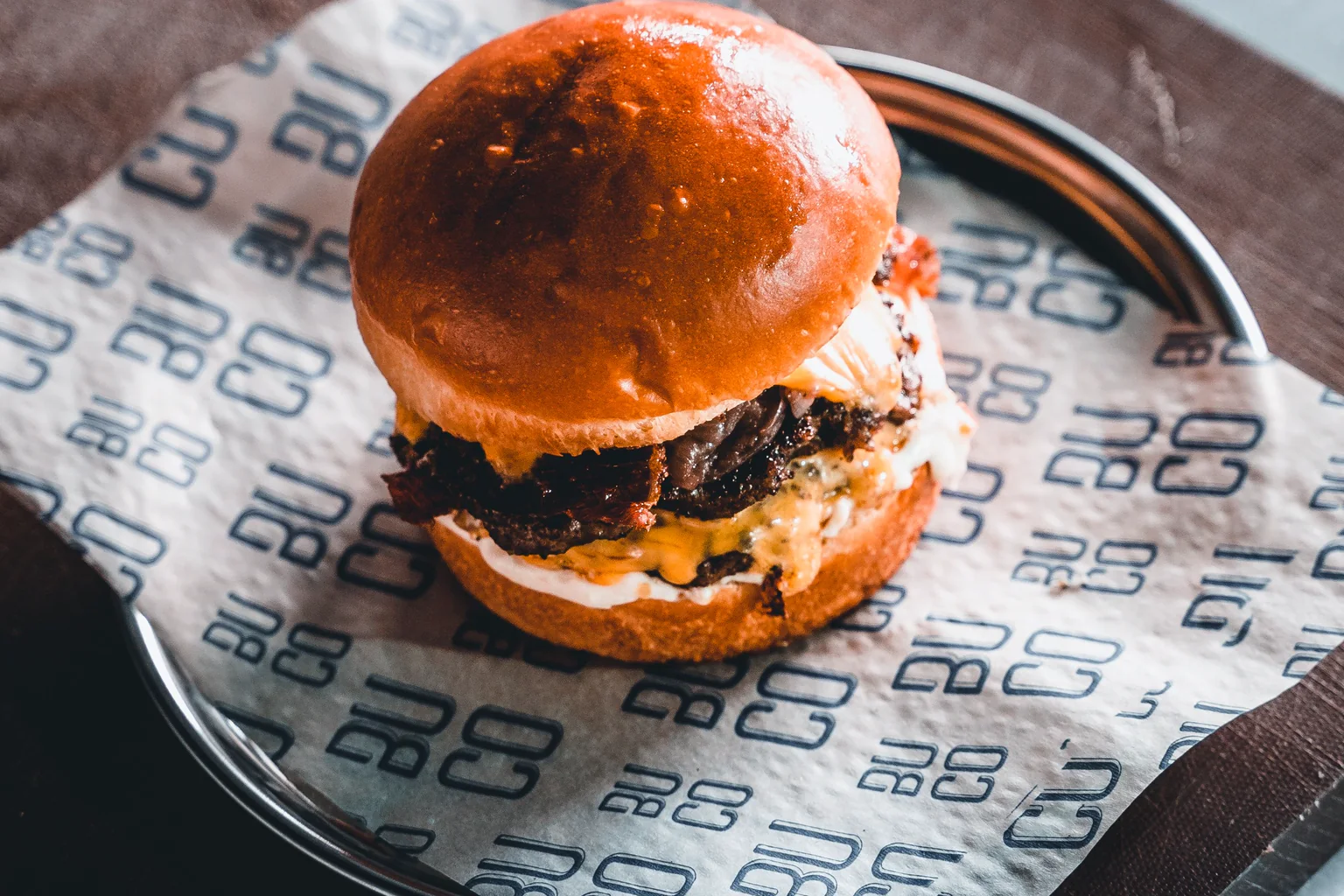
Choosing beef for burgers is not about finding a famous breed or a magic ratio. Before heating the griddle, compare the product name, ingredients, cut or blend, fat, grind, format, storage and cooking method. This guide takes you from label to plate with practical criteria and food safety in mind.
Quick answer: four decisions for today
If you are buying and cooking this afternoon, follow this route:
- Choose a clearly identified product: check the legal or sales name, percentage of meat, ingredients, allergens, weight and storage instructions.
- Choose the format before the cut: surface area matters for a smash burger; for a thicker patty, even thickness and control at the centre matter more.
- Keep the product cold and handle it as little as possible: form even portions without kneading or compressing them more than necessary.
- Cook thoroughly and evenly: AESAN recommends reaching at least 70 °C for two minutes for burgers and other minced-meat foods.
Why minced beef is different from a whole cut
On a whole cut, potential microorganisms are mainly found on the surface, where intense heat can act directly. Mincing multiplies that surface area and can distribute what was on the outside throughout the centre.
This is why doneness guidance intended for steaks or large bone-in rib steaks should not be transferred to burgers. The Spanish Agency for Food Safety and Nutrition (AESAN) recommends cooking burgers and other minced-meat foods thoroughly and evenly: at least 70 °C for two minutes.
This advice is especially important for children, older people, pregnant people and immunocompromised people. Cross-contamination must also be avoided: tongs, plates or boards that touched raw product must not touch the cooked burger again until they have been washed correctly.
Which cuts can work in a burger
There is no single compulsory cut. A burger may use one cut or a blend designed to balance flavour, fat, texture and cost. What matters is that each component has a purpose and, where relevant, that the seller can explain what is being offered.
| Reference | What it may contribute | What to check |
|---|---|---|
| Chuck | Strong flavour and a common combination of lean and fat. | The actual ratio varies between pieces; do not assume that the finished balance will be right. |
| Brisket | Character, structure and useful fat within a blend. | It may need to be combined with other cuts to adjust texture and juiciness. |
| Loin or rib trimmings | Beef flavour and fat from highly valued areas. | A prestigious cut name does not replace the composition or justify the price on its own. |
| Leaner cuts | A clean profile and less fatty texture. | An overly lean blend may lose juiciness if the format and cooking are not adjusted. |
If a product page says only ‘prime cuts’, useful information is still missing. Ask which meat it contains, the percentage of meat, any added ingredients, the weight of each unit and how it must be stored.
Fat: balance, not a magic number
Fat affects perceived juiciness, flavour, texture and the loss of volume during cooking. Repeating a famous ratio as though it were a universal rule oversimplifies the issue.
A thin, deeply browned burger may need a different balance from a thick patty. The cut, temperature of the blend, compression and actual griddle heat also matter. Two products declaring the same percentage can behave differently.
Where the information is available, use the composition for comparison rather than as a score. Ask the seller if it is missing. More fat may add juiciness, but it does not automatically make a burger better or suitable for every consumer.
Coarse or fine grind: how texture changes
A coarser grind tends to retain a more irregular, distinctly meaty texture. A finer grind produces a more uniform mixture. Neither is always superior; the right choice depends on the burger style and how the blend is handled.
- Keep the beef cold during preparation and minimise the time it spends out of refrigeration.
- Form portions without kneading more than necessary; excessive compression can toughen the texture.
- Aim for an even thickness so cooking is more predictable.
- Do not press the burger repeatedly while it cooks: this forces out some of its juices and fat.
- Always follow the specific instructions on a packaged product.
If you buy minced beef to shape burgers at home, prepare only the quantity you will use, do not leave it waiting on the worktop and return the remainder to refrigeration immediately.
Minced meat, hamburger and ‘burger meat’: why the label matters
These names are not interchangeable. European hygiene rules define minced meat as boned meat that has been minced and contains less than 1% salt. A meat preparation may include foodstuffs, seasonings or additives without losing the characteristics of fresh meat.
Spanish quality rules for meat products define a hamburger as a product made from minced meat with added salt, spices, seasonings or other foodstuffs. They also include the legal name ‘burger meat’, with its own composition requirements.
This does not mean that one name is always better. It means you should compare like with like and read the actual information: percentage and species of meat, ingredients, allergens, net weight, storage and preparation. Words such as ‘artisan’, ‘gourmet’ or ‘premium’ do not replace those details.
- Look for the full sales name.
- Check the percentage of meat and ingredient list.
- Check allergens, especially if the product includes bread, cereals, milk, egg or sulphites.
- Distinguish the weight of the meat from buns or other items in a pack.
- Confirm whether the product is chilled, frozen or previously defrosted.
Does aged beef make a better burger?
Aged beef may add a more intense profile and different nuances, but it is not an automatic guarantee of quality. A high number of ageing days does not explain on its own how the burger will taste.
The result still depends on the starting cut, fat, balance of the blend, grind, storage and cooking. Strong cheese, sweet sauces and numerous toppings may hide some of that character.
If you pay extra for aged beef, look for a concrete product explanation and decide whether the flavour profile suits a recipe in which the beef remains the main feature.
Smash burger or thick burger
The format changes the experience. Portion weight is only one factor: consider how much surface touches the griddle, how long heat takes to reach the centre and the texture you want. In every case, keep the beef cold, avoid cross-contamination and cook it thoroughly and evenly: AESAN recommends at least 70 °C for two minutes.
Smash: maximum browned surface
A thin portion increases contact with the griddle, encouraging a broad crust and crisp edges. Work with cold beef, use a well-preheated surface and press only at the start.
- Aim for: deep browning and a thin texture.
- Check: portion weight, composition and bun size.
Classic: balance and straightforward serving
A medium thickness can balance crust, internal texture and ease of service. Form even portions without overworking them, and control the heat so the centre cooks without burning the outside.
- Aim for: a balanced relationship between browning and thickness.
- Check: uniformity, unit weight and ingredients.
Thick: greater temperature control
A thick patty takes longer to heat at the centre and requires more careful control. Do not use internal colour as the only guide: check the thickest part with a clean thermometer.
- Aim for: greater thickness while retaining thorough cooking.
- Check: even thickness, core temperature and time out of refrigeration.
Do not use universal cooking times: portion weight, thickness, starting temperature and equipment all change them. A thick format can provide textural contrast without compromising thorough cooking. Do not rely on internal colour alone; a clean thermometer placed in the thickest part verifies heat treatment more reliably than visual estimation.
Buying and delivery checklist
- Read the sales name and full ingredient list.
- Compare meat percentage, species, weight per unit and number of units.
- Check storage, applicable date and preparation method.
- When buying online, check how chilled conditions are maintained and the delivery window.
- On receipt, check that the packaging is intact and the product arrives at the temperature stated by the seller.
- Photograph any issue before opening or discarding the packaging and contact the retailer.
- Store the product immediately and follow the label; do not invent a different shelf life.
- Guide to buying and storing beef
- What to check when receiving chilled delivery
- Seven criteria for recognising quality beef
Safe cooking at home
- Wash your hands before and after handling raw beef.
- Keep boards, tongs and tableware for raw and cooked product separate.
- Preheat the griddle or grill and avoid cooking over uncontrolled flare-ups.
- Cook thoroughly and evenly to at least 70 °C for two minutes.
- Use a clean thermometer in the thickest part when the format makes the centre difficult to assess.
- Serve immediately or store the cooked product under safe conditions.
Also follow the specific instructions on the pack and, in all cases, respect AESAN's recommendation to cook burgers thoroughly. People in vulnerable groups should not eat them undercooked.
Culinary quantity and dietary portion are not the same
A commercial unit weight describes the product; it is not a nutritional recommendation. AESAN guidance places one portion of meat at 100–125 grams and recommends zero to a maximum of three portions per week, prioritising poultry and rabbit and minimising processed meat. Keep the recipe quantity, the portion served and frequency of consumption as separate decisions.
Four common mistakes
- Choosing a product solely because it is labelled ‘premium’ without reading the composition.
- Assuming a particular breed or ageing profile guarantees the best blend.
- Overworking the beef and compressing it like a dough.
- Putting the cooked burger back on the plate that held the raw beef.
Frequently asked questions
There is no universally best cut. Chuck, brisket, loin or rib trimmings and other cuts can make interesting blends when flavour, fat and texture are balanced. The best option is clearly identified, suits the format and is handled and cooked correctly.
There is no official ratio that is perfect for every style. Fat affects juiciness, flavour and shrinkage, but grind, thickness and temperature also matter. Use the composition to compare products and ask the seller if it is unclear.
No. Minced meat is boned meat that has been minced and contains less than 1% salt. ‘Burger meat’ is a prepared product made with minced meat and other ingredients and has specific requirements. Always check the sales name, percentage of meat, ingredients and allergens.
It may offer a more intense flavour, but it is not automatically better. The cut, fat, grind, storage, other ingredients and cooking still determine the result.
AESAN recommends cooking burgers and other minced-meat foods thoroughly, reaching at least 70 °C for two minutes. Undercooked minced beef carries greater risk, especially for children, older people, pregnant people and immunocompromised people.
Sources and editorial context
The Discarlux article published on 15 July 2026 is used as an indication of culinary interest and an editorial starting point, not as the only technical source or as a ranking reproduced by Carnes Deluxe. Safety advice, definitions and consumption frequency come from official public sources.
- Discarlux: recent burger selection and culinary criteria
- AESAN: Escherichia coli, burgers and thorough cooking
- AESAN: healthy and sustainable dietary recommendations
- BOE: Royal Decree 474/2014, consolidated text in 2026
- EUR-Lex: Regulation (EC) No 853/2004, consolidated in 2026
Would you like to compare formats and use the available discount?
First check the discount instructions, then verify the sales name, ingredients, weight, storage and availability in the supplier's shop.
Recommendation link to an external supplier. Carnes Deluxe does not process orders or manage availability, prices, composition or delivery. Read our editorial transparency policy.