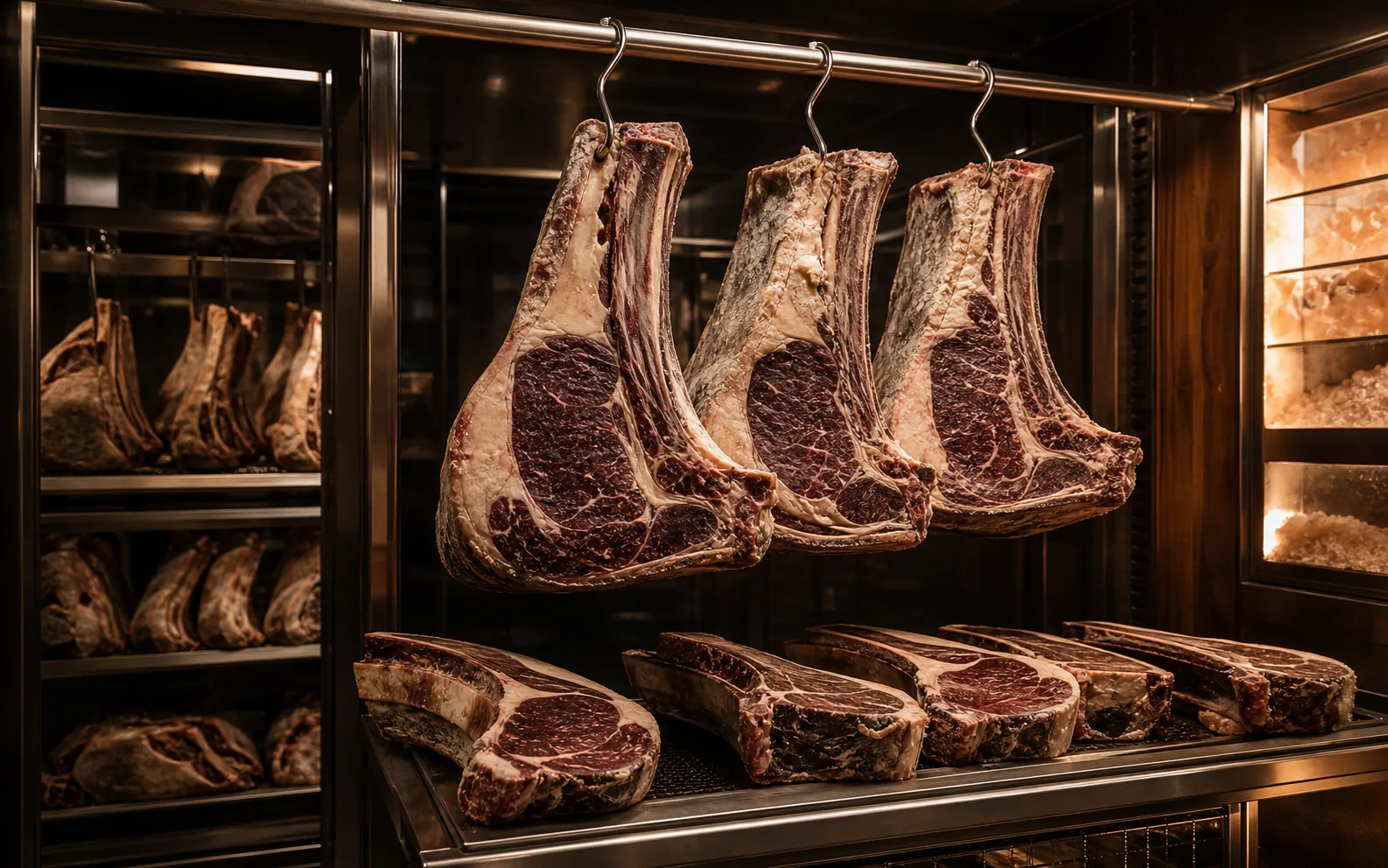
Aged beef appeals because it promises greater intensity, more complex aromas and a different texture. But the number of days never tells the whole story.
To choose well, you need to understand which cut is being aged, how the process is controlled and what sort of flavour you enjoy.
What beef ageing means
Beef ageing allows a cut to develop over a set period under controlled conditions. Its purpose is to improve texture and develop aromas—not to improvise long-term storage at home.
What happens during ageing
Ageing changes texture, moisture and the concentration of flavours. The result depends on the cut, the individual piece, the environment and professional judgement.
Dry ageing vs wet ageing
Dry ageing is generally associated with more concentrated flavour profiles. Wet ageing in vacuum packaging provides a more protected and consistent ageing environment. Neither method is automatically better in every case.
Which cut to choose first
For a first purchase, a bone-in rib steak or entrecôte with a balanced ageing profile can be a sensible option. Avoid beginning with an extreme profile if you do not yet know whether you will enjoy it.
Frequently asked questions
Longer ageing does not always mean a better experience. Safety depends on proper protocols, temperature control, hygiene and a reliable supplier.
Siguiente paso recomendado
Usa esta guía para decidir con más criterio y consulta siempre las condiciones actualizadas en la web del proveedor externo.