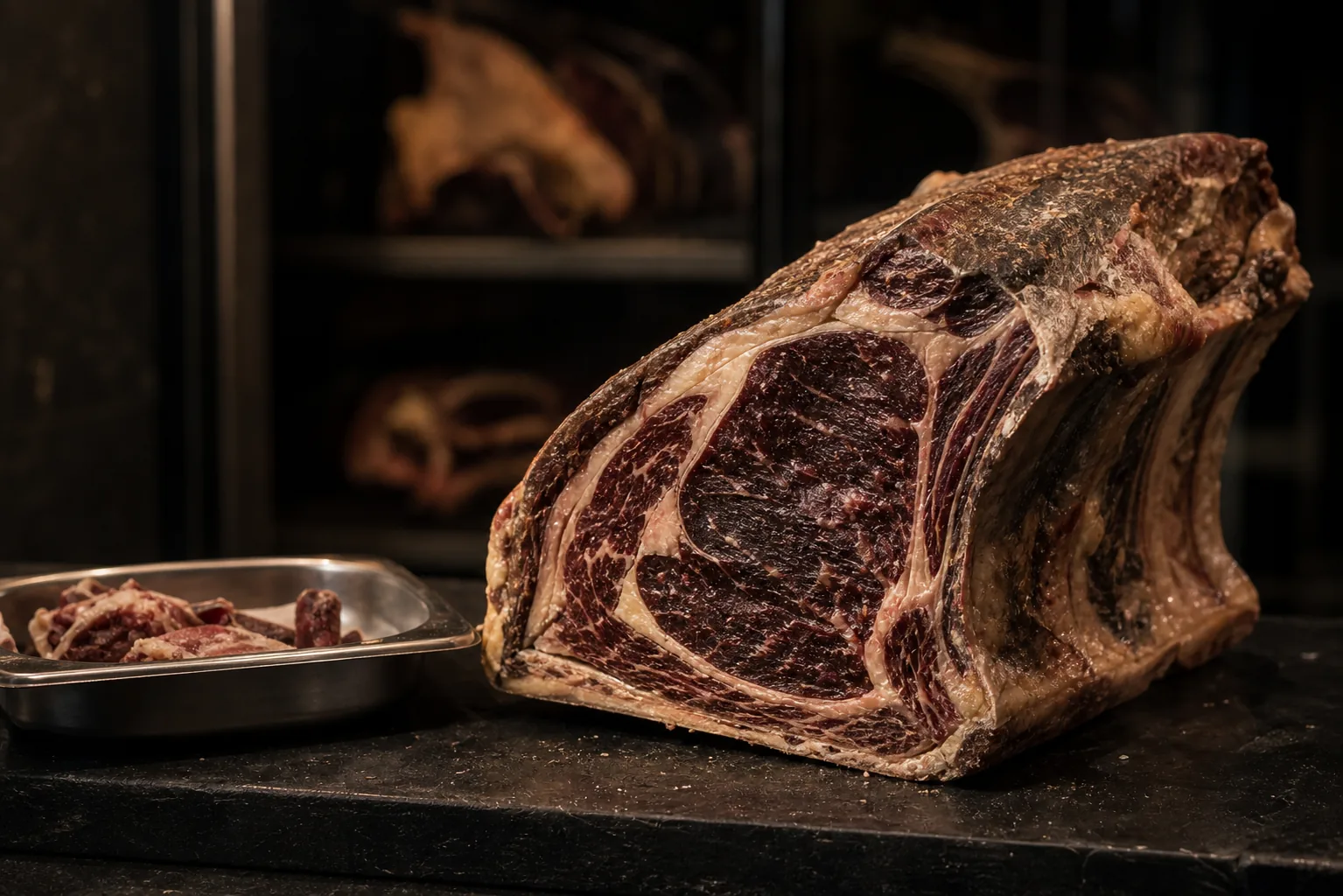
Dry-aged is one of the most widely used terms in premium beef. It describes beef aged without vacuum packaging in a controlled environment.
Its appeal lies in greater concentration and complexity, but not every palate is looking for that profile.
What dry-aged means
It refers to cuts aged in an environment where temperature, humidity and airflow are carefully controlled.
How it differs from wet ageing
Vacuum packaging protects the cut and produces a different development. Dry ageing generally concentrates aromas more strongly.
What it tastes like
It may produce deeper flavours with nutty, buttery or intensely beefy notes. It can also feel excessive to a first-time buyer.
Cuts commonly used for ageing
Bone-in rib steak, fore rib, striploin and entrecôte are commonly aged.
Who may find it worthwhile
It may suit people who want a more characterful experience and are comfortable with a less conventional flavour profile.
Siguiente paso recomendado
Usa esta guía para decidir con más criterio y consulta siempre las condiciones actualizadas en la web del proveedor externo.