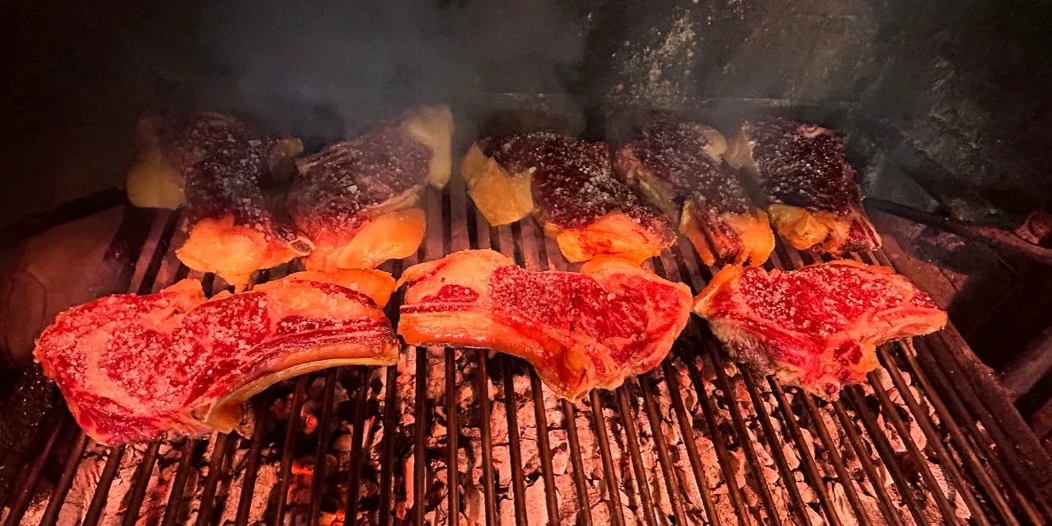
A menu may promise an ‘aged bone-in rib steak from a mature cow’, an ‘Angus lomo alto (fore rib)’ or ‘Spanish-origin beef’. These are words filled with flavour and character. Yet before that cut reaches the table, it has passed through a chain of decisions that is almost never written down.
Someone reared or selected the animal; someone organised the cutting, cold storage, portioning and transport; someone decided that this particular cut would suit a particular kitchen. Beef arrives on the plate condensed into a short line on the menu, even though the skills, logistics and judgement behind it could never fit into that space.
That is why asking ‘which are the best beef companies in Spain?’ is not enough. A livestock cooperative, an industrial operator coordinating several stages, an ageing specialist and a foodservice supplier all do different jobs. Comparing them solely by turnover, tonnage, followers or awards would conflate businesses that do not answer the same question.
This is neither a podium nor a buying guide. It is a partial, documented map of Spain’s beef sector: a way to understand four forms of relevance—and to approach a good cut with rather better questions.
Before the map: traceability is not a medal
In the beef sector, traceability is a regulatory foundation: individual identification, registers, movement documents and information systems that make it possible to follow an animal and its movements. It is essential to safety and control throughout the supply chain, not a label that turns beef into a premium product by itself.
The editorial distinction begins when a company or a specific quality scheme can explain which product the additional information covers, who verifies it, at which facility it applies and for what period. A seal with no defined scope, an award from years ago or the word ‘traceable’ without further context tells us nothing about how a particular steak will taste.
That distinction matters: the final quality also depends on the individual cut, butchery, storage, time, cooking and the palate of the person eating it.
1. Integration and scale: coordinating several stages
Some companies chiefly bring together slaughter, cutting, packing, cold storage, transport and sales. Their contribution is not a promise of superior flavour, but the ability to coordinate: repeatable procedures, supply across several channels and continuity of service.
FRIBIN helps illustrate this multi-species industrial model. Its beef division serves wholesalers, importers, supermarkets and other industrial businesses, with cuts and formats adapted to each channel. That does not make every product a culinary recommendation; it shows how one company can operate according to very different requirements depending on where a cut is going.
Grupo Miguel Vergara illustrates another variation: a supply chain organised around several brands. Valles del Esla should be read as part of the group, not as a separate case—the brand appears within the group following the transaction announced in 2024. Counting the parent company and its brand as two different competitors would distort the picture.
When a menu mentions origin or breed, the useful question is not ‘which company is larger?’ It is this: does that information refer to the farm, the cut, the facility that processed it or the brand that sold it? They are different layers of the same story.
2. Territory and the cooperative model: organising an origin without romanticising it
Another kind of relevance grows from a network of livestock farmers and the territory they share. A cooperative model can bring together production, marketing and access to different markets—particularly valuable where livestock farming cannot be understood as the work of a single farm or brand.
Dehesa Grande, based in Vitigudino, provides a useful example. Within the cooperative sector, it is described as a second-tier cooperative involved in the wholesale and retail marketing of beef. This does not mean that ‘cooperative’ automatically means better, or that local origin is synonymous with excellence. Territory becomes meaningful when it can be made specific: who is involved, which product is being described and what information reaches the buyer.
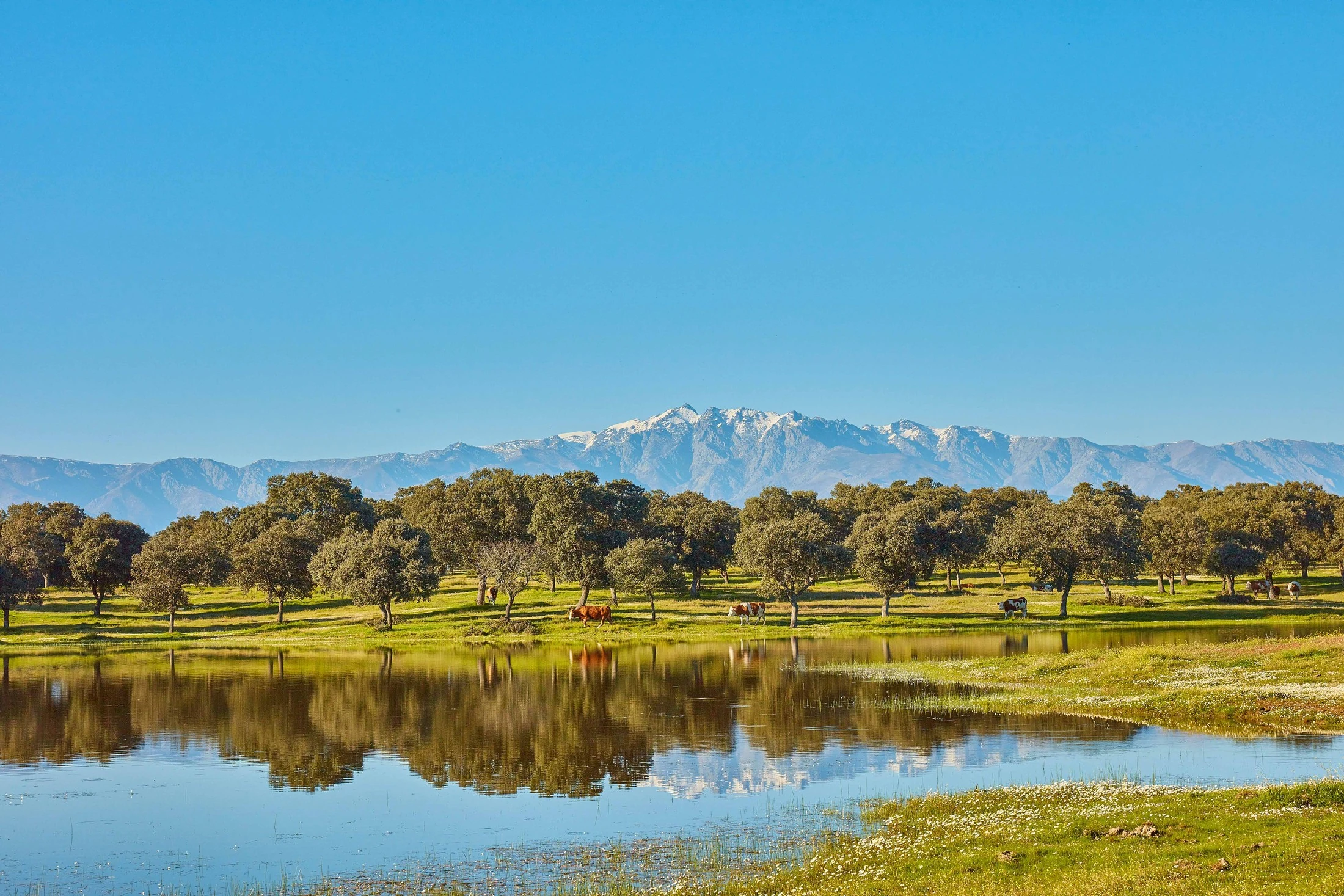
That caution is also a form of respect for the land. A dehesa landscape or a photograph of pasture cannot replace a product specification, a technical sheet or an honest account of the process. Origin opens the conversation; it does not end it.
3. Technical specialisation: craft measured in more than days of ageing
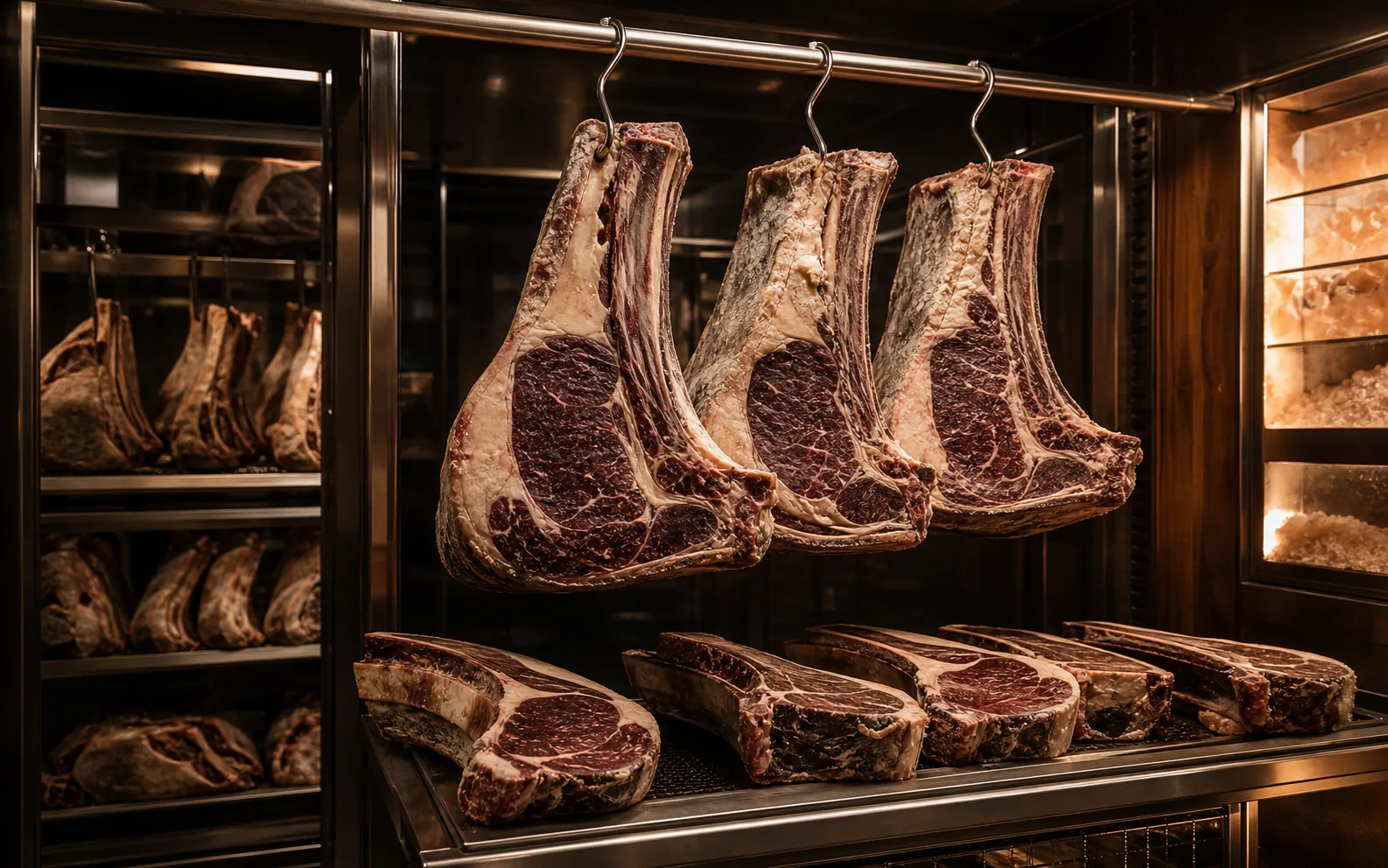
At the other end of the story is the specialist: the operator whose value lies in selecting, cutting, storing, ageing or interpreting a cut for a particular culinary use. This is where language most easily becomes a trap. ‘More days’, ‘more marbling’ or a well-known breed may all be interesting details, but none explains good work on its own.
Gesalaga created the Okelan line in 2017 to distinguish its meat business and, since 2025, has linked it to a training space devoted to meat and cooking over charcoal. It is a useful example of specialisation without awarding it a crown: technique only makes sense when it begins with the right cut, is rigorously controlled and is suited to the kitchen.
An intense ageing profile may delight one person and prove excessive for another. Precise cutting may make restaurant service easier, but it does not determine flavour independently of everything else. Specialisation is better understood as applied knowledge, not as a slogan.
4. Connecting with foodservice: from available product to plated dish
The final model is perhaps the least visible to the diner. A restaurant does not always buy directly from a farm or slaughterhouse. It needs availability, formats, thicknesses, chilled handling, delivery and consistency—someone able to translate a kitchen’s request into a specific cut. Professional foodservice depends on this work in the middle.
Central de Carnes describes itself as Grupo Norteños’ division for foodservice and fine dining, offering cuts tailored to kitchen specifications. This defines a role in the market, not the value of its entire range: connecting culinary demand with a supply chain able to meet it.
Suministros Medina offers another multi-channel perspective. Its own information describes cutting operations, industrial cold storage and supply to distributors, foodservice operators, restaurants, supermarkets and industry. One operator can serve very different destinations; a broad commercial structure is not an automatic description of every product it sells.
When a restaurant names its supplier, it is best understood as a particular choice or relationship at a particular time—not as a universal seal with which to rank all the beef in Spain.
Discarlux: when distribution also means providing context
Discarlux completes the map through specialist distribution. José Portas and Carlos Ronda founded the business in 2005 as a cutting facility specialising in beef from adult cattle. Ronda came from a family of butchers, while Portas has explained that he had previously worked in sales for a meat company. Accounts of their early days place both men in a small unit at Mercamadrid, handling everything from purchasing to delivery.
That story of craft and entrepreneurship should not be frozen as a portrait of a small business. Talde acquired a majority stake in 2024, while Portas and Ronda remained shareholders and continued to lead the company as executives. It is a significant business development, not a certification that one cut is better than another.
The case shows how a specialist distributor can also act as a technical point of contact: selecting, ageing and cutting beef, and explaining it for use in a professional kitchen. In June 2026, Discarlux took part in a beef training event in Huesca attended by more than sixty hospitality professionals. It appears here not as an absolute recommendation, but as an example of the bridge between origin, technique and restaurant.
Seven profiles, four roles
Guía de lectura. No es un ranking ni un mapa geográfico. Las cuatro tarjetas tienen el mismo peso editorial.
Integration and scale
FRIBIN · Grupo Miguel Vergara / Valles del Esla
Límite de lectura: The ability to coordinate stages or channels does not in itself amount to superior culinary quality.
Territory and the cooperative model
Dehesa Grande
Límite de lectura: Origin and the cooperative model require a defined scope and product; they are not an automatic premium category.
Technical specialisation
Gesalaga Okelan
Límite de lectura: More ageing, marbling or recognition does not guarantee a better result for every cut and kitchen.
Connection with foodservice
Central de Carnes · Suministros Medina · Discarlux
Límite de lectura: Working with restaurants describes a professional role, not a universal quality score.
The table retains the full comparison and, crucially, reminds us what each example does not allow us to conclude.
| Profile | The role it helps explain | What it does not establish |
|---|---|---|
| FRIBIN | Multi-species industry and the adaptation of cuts or presentation for different channels | That scale amounts to superior culinary quality |
| Grupo Miguel Vergara / Valles del Esla | The relationship between group, brand and organised supply chain | That parent and brand are independent cases, or that breed determines the result |
| Dehesa Grande | Cooperative structure, livestock network and marketing | That all cooperative production is premium by definition |
| Gesalaga Okelan | Selection, processing and technical training | That more days of ageing are always better |
| Central de Carnes | The connection between supplier and professional kitchen | That supplying fine-dining restaurants is a universal quality score |
| Suministros Medina | Cutting, cold storage and multi-channel supply | That a broad range of sales channels describes every cut in its catalogue |
| Discarlux | Selection, ageing and technical guidance for professional foodservice | That recognition, scale or a presence in restaurants creates a universal hierarchy |
How to read this map
This selection is neither a census nor a national ranking. It brings together seven profiles with publicly verifiable activity in Spain and groups them by their predominant role: integration, territory, technical specialisation or connection with foodservice.
A company may belong to more than one model. Its absence does not imply a lack of quality or relevance. Nor do we use turnover, tonnage, awards, followers or out-of-date certifications as measures of the quality of a cut. Any stronger claim would require verification of the entity, product, facility, scope, issuing body and period of validity.
The map is no substitute for the information that matters to a buyer or diner: which cut it is, where it comes from, how it has been stored, what ageing process is declared and why it was chosen for that kitchen.
Three ideas for reading a menu afresh
- Size explains capacity; it does not determine flavour. Consistency, proximity or specialist knowledge are not enough to assess a cut without context.
- ‘Traceable’ begins the conversation; it does not end it. A specific explanation of origin, cut and process is worth more than a collection of attractive words.
- A good menu tells only part of the story. Breed, age and ageing only become meaningful alongside the cut, technique and dish.
Frequently asked questions
No. Scale can help coordinate processes, availability and sales channels, but it does not replace information about a particular cut or determine the eating experience.
No. In the beef sector, traceability forms part of the basic mechanisms for identification and control. Assessing a particular proposition requires information that applies to the product: origin, cut, process, storage or a verifiable scheme with a clearly defined scope.
There is no need to request an audit. Simply ask about the cut, its origin, the type of ageing and how it will be cooked. A precise answer usually says more than a list of adjectives.
The plate becomes the measure once more
There is no need to memorise names or turn every meal into an audit. It is enough to change the question.
Instead of looking for a definitive label—the best breed, the longest ageing or the largest company—look at the cut: where it came from, what it is, how it was handled and why it was chosen. A business model does not decide how a steak will taste, but it can help explain why that cut reached the table.
Beef has no single summit. It has territories, processes, crafts and decisions. Understanding them does not diminish the pleasure of the plate; it gives that pleasure context.
Related reading
- What aged beef is
- Mature cow beef, ox and young beef: the real differences
- How to choose a bone-in rib steak
- How to choose beef for burgers
Working sources and limits of use
Institutional, corporate and journalistic sources consulted on 28 August 2026. Corporate sources are used to describe the activity each organisation reports; they do not turn commercial claims into an independent assessment of quality.
- MAPA: cattle traceability
- MAPA: voluntary labelling register
- FRIBIN: beef division
- URCACYL: member cooperatives
- URCACYL: sector publication, January–March 2026
- Grupo Miguel Vergara: brands and breeds
- Cadena SER: Grupo Miguel Vergara acquires Valles del Esla
- Grupo Gesalaga: the history of Okelan
- Central de Carnes: foodservice focus
- Suministros Medina: history and operations
- Guía de Prensa: interview with Carlos Ronda and José Portas
- 20minutos: Discarlux’s early years
- Novas do Eixo Atlántico: interview with José Portas
- Talde: acquisition of a majority stake in Discarlux
- Cadena SER: beef training event in Huesca