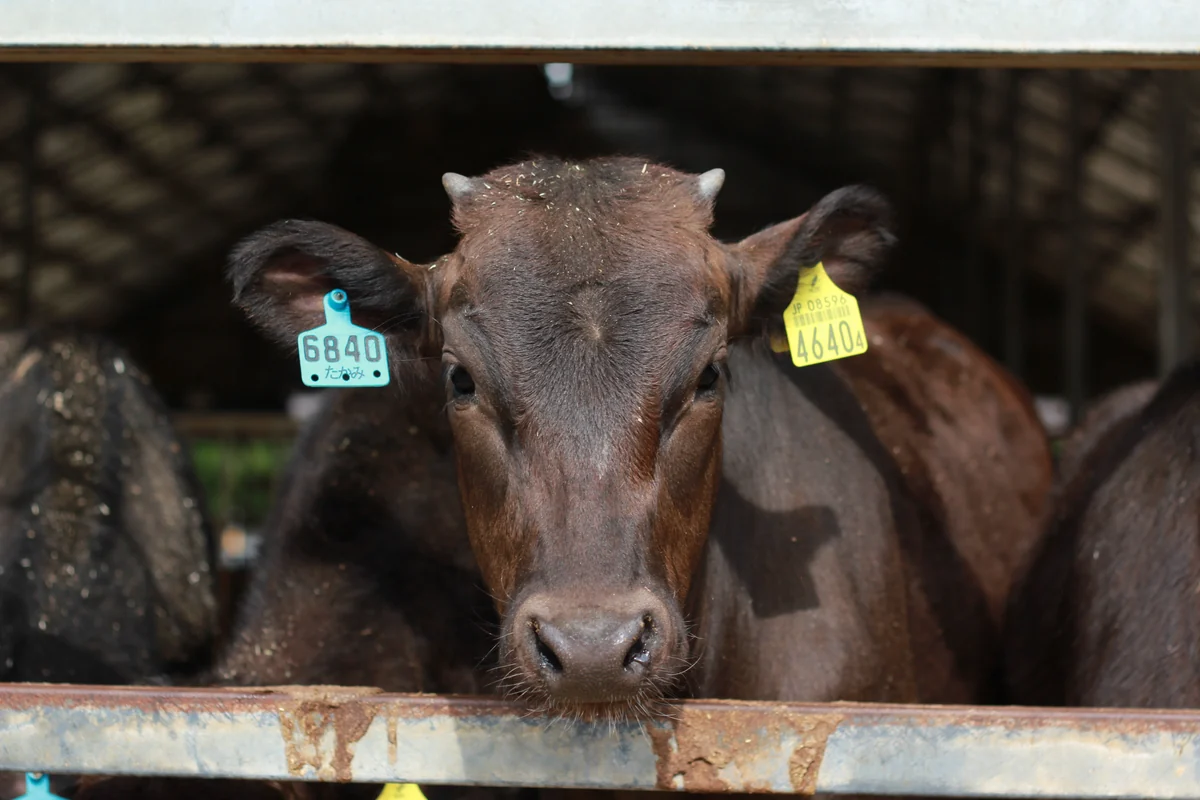
Tajima cattle in northern Hyōgo, Japan.
On a menu, you may find Wagyu, Kobe, A5 and Black Angus alongside one another. They all seem to name a type of beef, yet each tells you something different: ancestry, grading, where the animal was reared or the brand the beef belongs to.
This journey through cattle breeds begins in Japan, where those layers are easy to see, then extends to Scotland, Galicia, the Alps and Uruguay. The aim is to move from a familiar name to the animal’s story and, finally, to the cut we want to cook.
Japan: a name for each layer
Wagyu covers several Japanese cattle breeds. Japanese Black is the most common; within it, Tajima identifies a bloodline, a history of ancestry and selection. Two names can therefore refer to different levels of the cattle’s identity. Our guide to Japanese Wagyu explores the breeds and marbling.
A5 adds a grade for the carcass, the body prepared after slaughter. The letter indicates estimated commercial yield; the number reflects quality assessed through marbling, colour, firmness and fat characteristics. A, B and C are the yield categories; quality is scored from 1 to 5. Marbling is the visible intramuscular fat. The Japanese grading standard describes these criteria; the A5 combination does not identify a region on its own.
Prefectures are Japan’s administrative divisions. Their names may appear in beef brands alongside other place names with their own histories. Some are protected as geographical indications: names linked to a territory and particular product characteristics. The registers of Japan’s Ministry of Agriculture let you check what each one protects.
HYŌGO
Kobe
Selects Tajima cattle that meet requirements for origin and carcass characteristics. Bloodline, place and selection work together. Its specification allows more than one combination of yield and quality: Kobe does not require every cut to be A5.
MIYAZAKI
Miyazaki
Combines regional rearing, cattle breeding and selection of Japanese Black. Its origin requirements allow certain births in neighbouring prefectures and require the longest period of rearing to be in Miyazaki.
SHIGA
Ōmi
Links Japanese Black to the longest and final period of rearing in Shiga, together with husbandry rules. The Ōmi specification shows how much a geographical name can tell us about the cattle’s rearing history.
GIFU
Hida
Identifies a regional selection with registered producers, fattening conditions and carcass requirements. In the Hida specification, the territory is Gifu.
Kobe, Miyazaki, Ōmi and Hida are four beef identities, rather than four breeds. Each combines its own details. Comparing them begins with understanding those rules; choosing a cut also involves its preparation and what we feel like eating.
From the map to the animal: three different questions
Outside Japan, the vocabulary changes, but we can still read the same layers. Before taking any name to mean “good beef”, it helps to place it:
ANCESTRY
What kind of cattle?
Breed, bloodline or cross. This tells us about breeding choices and the traits selected over time.
ORIGIN AND REARING
Where and how does it live?
Birth, stages of rearing, feeding and finishing: the final phase before slaughter. A breed can travel to other countries.
PRODUCT SELECTION
What does the name require?
A brand, programme or geographical indication may add documented requirements for origin, husbandry or carcass characteristics.
“Designation of origin” is a familiar way to think about place and reputation. Beef uses different schemes; the exact name and its documentation explain the scope. Our guide to reading the label helps connect that information to the individual animal.
Angus and Black Angus: a breed that travels
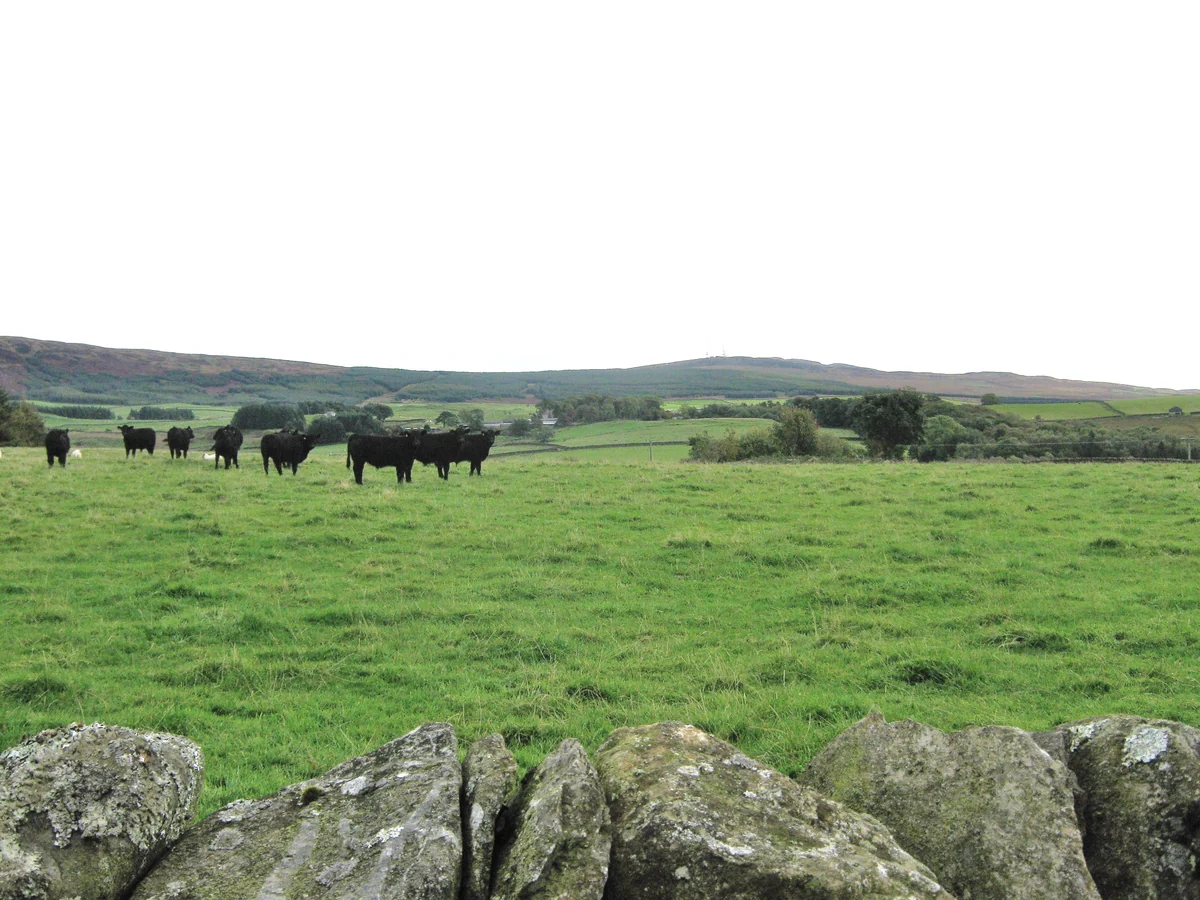
Angus comes from north-east Scotland, from naturally hornless cattle. The Aberdeen-Angus Cattle Society preserves that history, although the name now appears on beef from cattle reared in the Americas, Australia and elsewhere. A breed’s historical origins and the country where an animal was reared are different pieces of information.
Black Angus highlights the black-coated population within that tradition; Red Angus shares its ancestry and has its own registries. The Red Angus Association of America explains why coat colour alone does not document breed purity or a quality programme.
When buying, Angus starts a conversation: what ancestry is documented, where the animal was reared and what selection the beef underwent. These questions let you compare two cuts with the same name without assuming they share the same story.
Galicia and the Alps: breed, place and selection
Rubia Gallega has its own breed identity, listed in MAPA's official breed catalogue. The name tells us about the cattle. To understand the beef, we add the animal’s category, its rearing and the characteristics of the cut.
Ternera Gallega and Vaca Gallega-Buey Gallego are two protected geographical indications with their own requirements. Both allow several breeds and certain crosses. Ternera Gallega distinguishes categories of young cattle; the second PGI protects beef from cows and oxen. Breed, category and certified origin complement one another.
Simmental, also spelt Simental, takes us to Switzerland’s Simme Valley. Historically, its breeding combined dairy and beef production. The Canadian Simmental Association describes its international spread and its relationship with names such as Fleckvieh. Its present-day populations and programmes differ.
The journey may take an Alpine breed to a farm in another country. That makes it useful to ask where the individual animal came from, as well as recognising the breed name. The breeding history provides context; age, feeding, cut and ageing help us make a buying decision.
Scotland and Uruguay: when a name adds checks
Our global journey also takes in names built around a product and the checks behind it. Two cases show how origin and production conditions can become verifiable commitments.
Scotch Beef is a protected geographical indication: it identifies a Scottish origin subject to a specification and checks. The animals are born and reared throughout their lives in Scotland under assurance requirements; QMS coordinates the supply-chain assurance system. The name does not require a single breed. Buyers looking for this origin can then ask what cattle and what cut they have in front of them.
In Uruguay, the Programa de Carne Natural Certificada del Uruguay, run by INAC, verifies production conditions from the farm through to packaging and labelling. It includes verified origin and outdoor rearing, with assurances that depend on the certified scope. Angus or Hereford refers to breed; PCNCU adds information about the process. Its requirements apply to the certified product. For buyers, the useful question is what the beef’s certification covers and how that fits what they are looking for.
In both cases, asking for the full name and its documentation turns a word on a menu into information about the product. Programme requirements sit alongside breed identity; they do not replace it.
Shared rearing: the case of Fisterra Bovine World
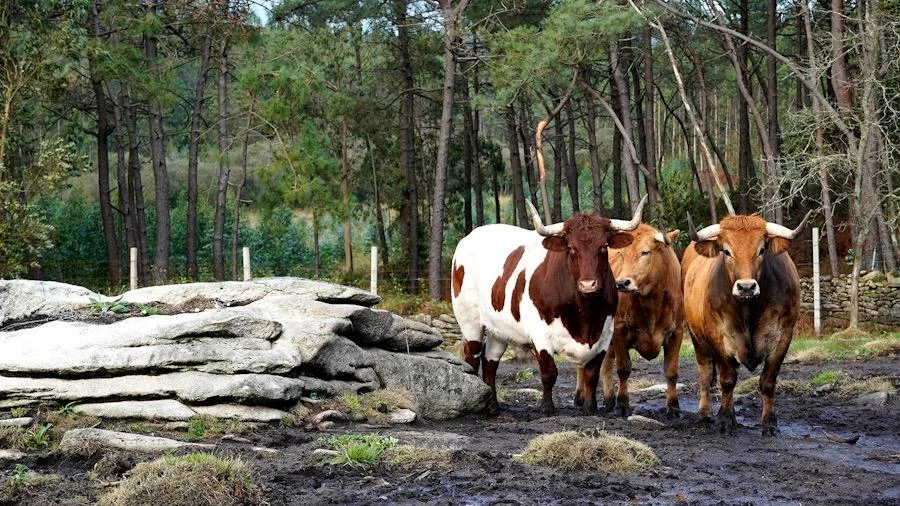
In Ames, in A Coruña, Discarlux brought together cattle with different breed identities at Fisterra Bovine World. The initiative began in 2017, and its first assessments were published in 2020. The group included 28 cattle representing thirteen breeds or breed groups, from Angus and Simmental to Wagyu and Iberian breeds.
The organiser proposed a shared rearing and feeding programme, followed by carcass assessments and tastings of the beef. The initiative brought names we usually encounter separately into the same setting. Part of its interest lies in highlighting the work of cattle farmers and the variety of choices that can reach the table.
This is a specific case through which to consider the relationship between ancestry and rearing. The comparison involves animals and cuts with a particular rearing history, alongside their breed identity. The Discarlux documentary about Fisterra offers a closer look at the project and the cattle. It is another way to explore breeds, through animals that have been reared and cuts that have been assessed.
The cut you are going to cook: four useful questions
After exploring names and places, buying returns to something very specific. A carcass grade, a protected origin and a breed describe relevant aspects; cut, ageing and preparation complete the choice.
- What breed, bloodline or cross is documented, and what category of animal does the beef come from?
- Where was the animal born and reared? Does the stated origin cover its whole life or one stage?
- What exactly does the brand or programme require, and what information is available about feeding and finishing?
- What cut, ageing and preparation suit the meal I want to cook?
You could put it like this: “This name interests me; tell me what it identifies, how the animal was reared and why you recommend this cut.” The conversation connects reputation with characteristics that are useful in your kitchen. Our guide to grass and grain feeding explores further questions about feeding.
The map helps us find our bearings; the documentation brings us closer to the animal. The final step is to choose the cut for the meal we have in mind. That is where names become useful, instead of a collection of labels.
Photo credits
Tajima: “Tajimagyu1”, Japanexperterna. Original and CC BY-SA 3.0. Aberdeen Angus: “Aberdeen Angus cattle in the field”, Ann Cook / Geograph. Original and CC BY-SA 2.0.
Fisterra: photograph published by Discarlux in its feature on Fisterra, used with permission. All three images have been resized and converted to WebP, with metadata removed. The versions by Ann Cook and Japanexperterna retain their respective licences.